Homework for tutoring students: set less, check it, use it
How to set homework for tutoring students that actually gets done: short tasks, clear due dates, quick checking and feedback you use in the next lesson.
LearnWorkly team5 min read

Most tutors set homework. Far fewer have a system for it. The task gets sent in a chat message, the student half-remembers it the night before the next lesson, and the first ten minutes of that lesson go on working out what was and was not done. Then the cycle repeats.
Homework for tutoring students can be one of the most useful parts of your week, or a source of quiet friction with families. This guide covers how to set homework that gets done: how much to set, what kinds of task work best, how to make due dates clear, how to check it quickly, and how to use it in the next lesson.
Why homework matters more in tutoring
A student who sees you once a week spends about one hour with you and 167 hours without you. What happens in those other hours decides how much of the lesson sticks.
The research is broadly positive but comes with conditions. The Education Endowment Foundation’s Teaching and Learning Toolkit entry on homework reports a positive average impact, larger for older students than for younger ones. It also stresses that the quality of the task matters more than the amount, and that homework works best when it links clearly to what was learned in the lesson and students get feedback on it.
That gives tutors three simple rules: set tasks that connect to the lesson, keep them short enough to be done properly, and always do something with the result.
How much homework to set
Less than you think. For most tutoring students, 15 to 30 minutes a week is enough, often split into two or three short sessions. Exam students close to their exams can do more, but only if the work is focused.
Some guidelines that help:
- One clear goal per task. “Practise solving two-step equations” is a task. “Revise algebra” is a wish.
- Agree the amount with the family. Parents of younger students should know roughly how long homework takes, so they can make time for it.
- Remember the student already has school homework. A tutor who adds an hour of extra work every week to a busy teenager’s schedule is quickly ignored.
Choose tasks that give you useful evidence
The best homework does two jobs at once: it gives the student practice, and it shows you what they can now do on their own. Good formats for tutoring:
- Retrieval practice. Five or six questions on today’s topic and a few on older topics. Spacing practice out over weeks helps students remember more than a single block.
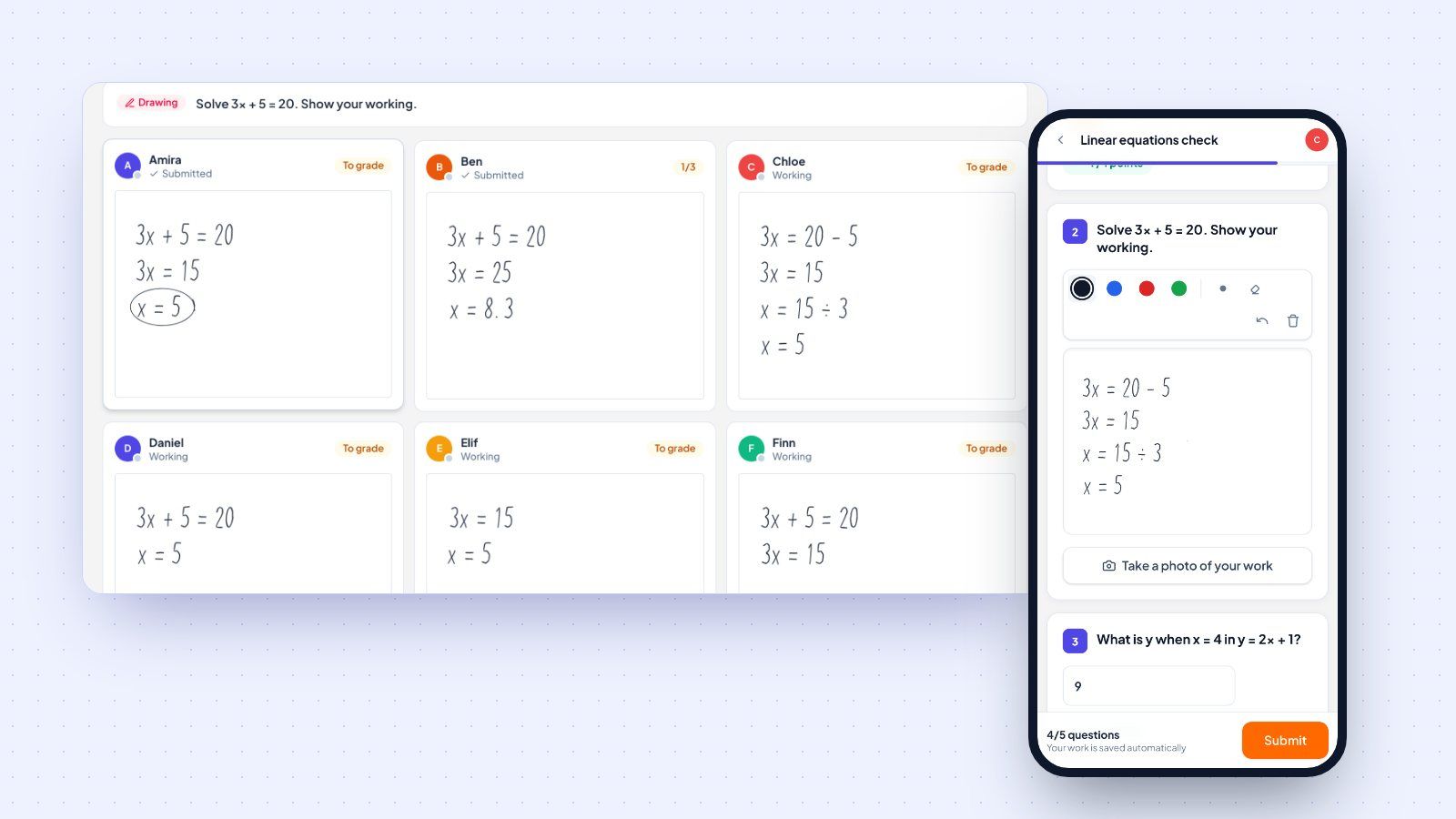
- One worked problem with full working. For maths and science, a photo or drawing of the working tells you far more than a final answer.
- A short spoken answer. For language students, a one- or two-minute recording is real speaking practice and gives you material for the next lesson.
- A short piece of writing with one thing to focus on, such as linking words or paragraph structure.
- Self-study practice such as flashcards, which students can repeat as often as they like.
Avoid long worksheets where the student only sends back the final page. You will not see where things went wrong, and the student will not get the practice of explaining it.
Make the due date and the rules clear
Most missed homework is not refusal. It is a student who was not sure what to do or when. Clear rules save everyone time:
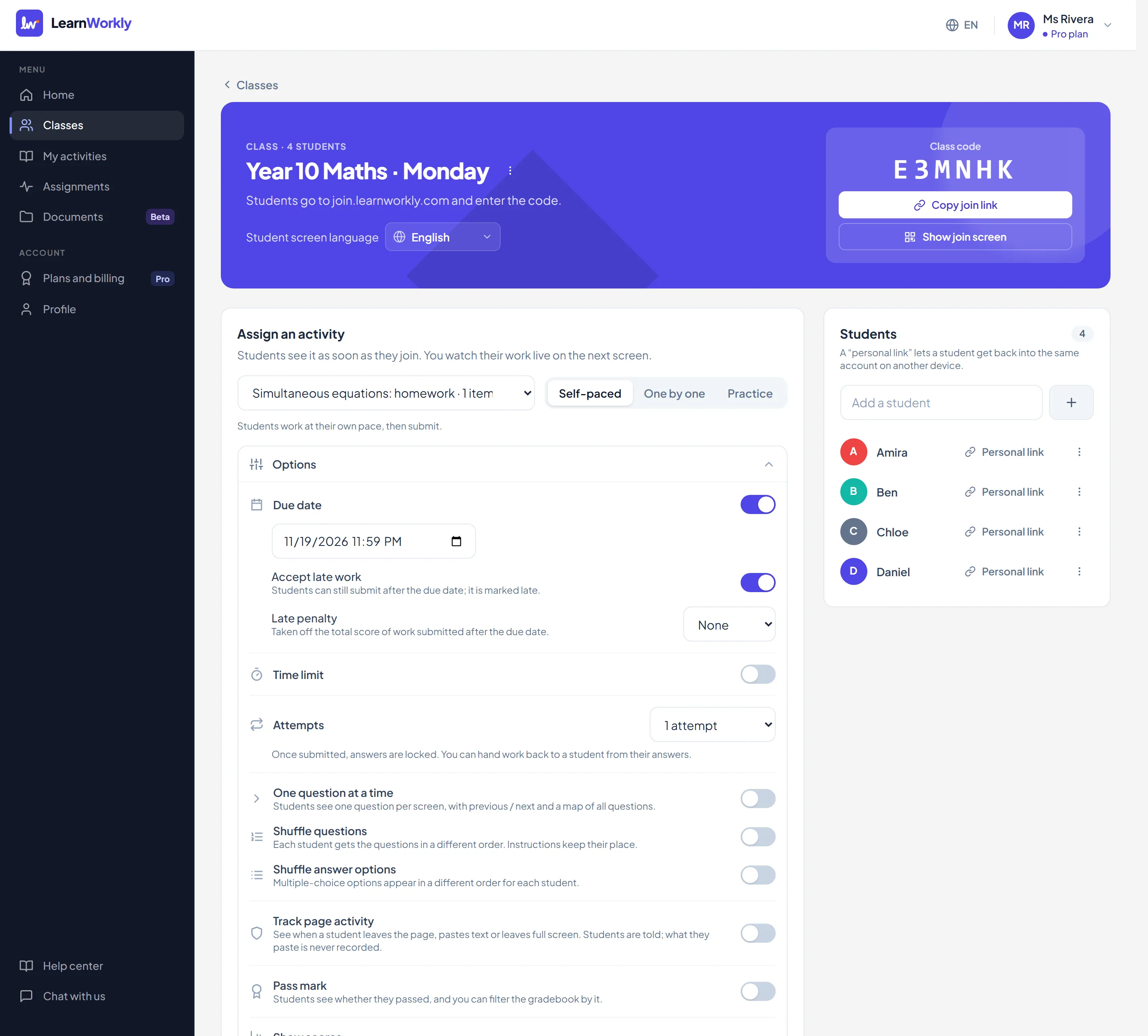
- Set a due date that leaves you time to look. If the lesson is on Thursday, make homework due on Tuesday evening, not one minute before the lesson.
- Decide how you handle late work and tell families once, at the start, rather than negotiating every week.
- Be clear about attempts. For practice, several attempts are fine. For a check of what the student can do alone, one attempt tells you more.
- Send one reminder, not five. A short reminder the day before it is due is enough for most students.
In LearnWorkly, you set this once when you assign: a due date, rules for late work, an optional time limit and the number of attempts. Students and parents whose email you have saved, with their permission, get an email about the new homework, and on the Solo and Pro plans a reminder the day before it is due.
Check homework quickly
Marking can easily take longer than the homework itself. A few ways to keep it fast:
- Let questions with a single right answer mark themselves. Multiple choice, numbers, short answers and fill in the blank can all be auto-marked, so you only read open answers, working and recordings.
- Look at patterns before individuals. If four out of five students in a group got the same question wrong, that is a teaching point for the whole group, not five separate comments.
- Give one useful comment, not ten. Point to the most important thing to fix and how to fix it. A short voice note is often quicker to record than written feedback and easier for younger students to follow.
The page on feedback in LearnWorkly shows how comments, voice notes and two-way feedback work.
Use homework in the next lesson
Homework only pays off if it changes what happens next. Before each lesson, take two minutes to look at the results and decide:
- What to reteach. Start with the most common mistake, ideally using a student’s own answer (without their name if it is a group).
- What to skip. If everyone got a topic right, do not spend ten minutes revising it.
- Who to give another try. Handing work back to a student to correct after feedback is often more valuable than setting something new.
Over a term, homework results also give you real evidence for progress updates to families. Scores and comments from homework are exactly what parents want to see, and they are much more convincing than “she’s doing well”.
What to do when homework is not done
It will happen. Before you react, find out why:
- The task was unclear or too long. Fix the task, not the student.
- The student had a heavy week at school. Agree a smaller task, or move the due date.
- The student did not see the point. Show them how last week’s homework changed this week’s lesson.
- It keeps happening. Have a short, friendly conversation with the parent or the adult student about what is realistic.
Never spend most of a lesson doing the homework together. That teaches students that skipping it costs nothing.
A simple homework routine to start with
If you are setting homework by message today, try this for one month: one short task per lesson, due two days before the next one, with a single comment on each piece of work and the most common mistake as the starter for the next lesson. Most tutors find that completion goes up when the routine is predictable.
If you want to set homework with due dates, auto-marking and feedback in one place, LearnWorkly is free for up to 10 students. The homework features page shows every option, including email reminders on the Solo and Pro plans.