Heads or tails game: rules for events and classes
Heads or tails game rules for galas, fun days and classrooms: the classic stand-up version, keeping it a free prize game, and playing on phones.
LearnWorkly team· Updated 7 min read
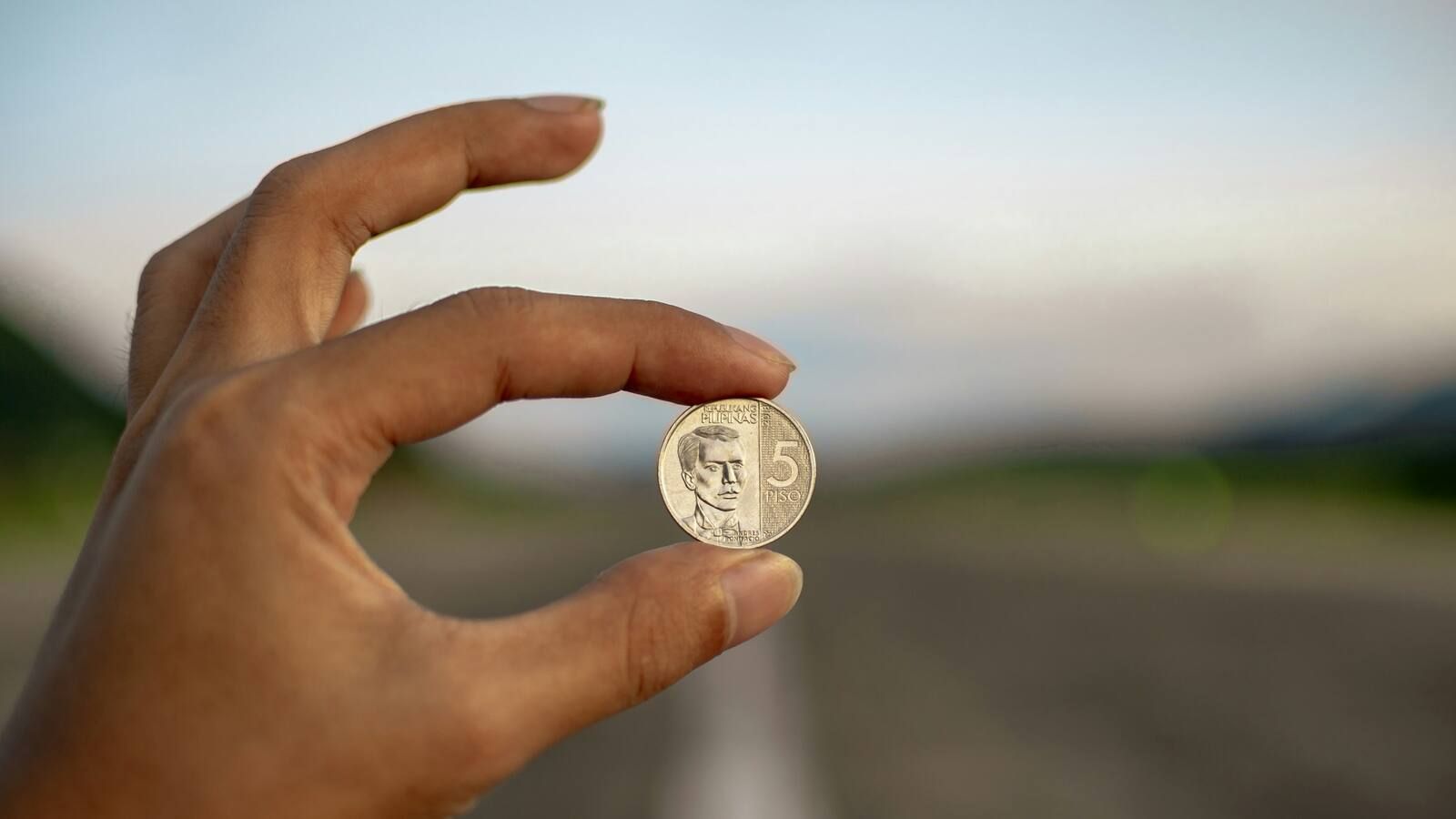
The heads or tails game needs one coin, one confident voice and a room full of people who are happy to stand up. Everyone calls the coin, the host flips it, and anyone who called wrong sits down. Round by round the room shrinks until one person, or a small group of finalists, is left to collect the prize.
It works at a charity gala or a company fun day, and just as well in a primary classroom on a Friday afternoon. Nobody needs to know anything, and everybody has the same chance. Below are the classic rules, how to keep it a fair prize game rather than a bet, and how to run it on phones when the room is too big to see every call.
Heads or tails game rules: the classic stand-up version
What you need
- A coin that is easy to see, or a large prop coin for the stage.
- A host with a microphone if the room has more than about 30 people.
- A second person beside the host who watches the flip, so nobody can say the host fixed it.
- A prize, and a decision made in advance about how many winners you want.
How a round works
- Everyone who is playing stands up.
- Each player shows their call with their hands: hands on head for heads, hands on hips (or on the bottom) for tails. The body signal is the fun part, and the host can see every call from the stage.
- The host counts down from three, and everyone commits before the coin leaves the thumb.
- The host flips the coin and announces the side, with the witness watching.
- Everyone who called wrong sits down. So does anyone who did not choose a side.
- Repeat until the number of winners you planned is left.
A coin knocks out about half the players each round, so the game moves faster than people expect. A room of 100 needs around seven rounds to get to one winner; 30 people need about five. That is a few minutes of real noise, which is why event hosts like it.
Settle the awkward cases before you start
- Everyone still standing calls wrong. Nobody sits down, and you flip again. Say this rule out loud at the start, or the last two players will argue about it.
- Late switchers. Some players move their hands as the coin spins. Shout “Lock it in!” before every flip and treat any change after that as a wrong call.
- Two players who keep guessing right. Ask one to call heads and the other tails, then flip once to finish.
Heads or tails at fundraisers and galas: keep it a free prize game
At charity galas and school auctions, heads or tails often follows the main auction as a quick, loud break. Momentive Software’s guide to running a heads or tails fundraiser describes the usual format: guests stand, call with their hands on their head or their tail, sit down when they are wrong, and the last ten or so move to the front of the room for the final rounds. In that version, guests pay to play and wear a wristband to show it.
Be careful with the paying part. When people pay to enter a game that only chance decides, many countries treat it as a lottery or as gambling, and that can need a licence or a registration even for a charity. In Great Britain, the Gambling Commission explains that a free draw needs a free entry route that is no less convenient than the paid one, and a scheme that gets this wrong can become an illegal lottery. Other countries have their own rules, and this post is not legal advice. Ask your local licensing authority or the charity’s adviser before you sell anything.
The simplest way to stay on the right side of it is to keep the coin game free:
- Everyone in the room plays, with no ticket and no stake.
- A sponsor or a parent donates the prize, such as a hamper or a voucher; it is never a share of money collected for the game.
- The money comes from the tickets and the auction; the coin game is the part everyone can join, whatever they gave.
How to play a heads or tails game online with phones
Hands on heads works brilliantly with 40 people. With 300 in a hall, or half the audience watching from home, nobody on stage can check every call. A phone version solves that: everyone calls on their own screen, the big screen flips the coin, and the software tracks who is still in.
In LearnWorkly, the host adds the game as a slide in a presentation and shows it on the big screen. Everyone else goes to join.learnworkly.com, enters the code or scans the QR code beside the slide, and picks a nickname. There is no app to install and no account to make. How many can join depends on the plan: 10 on Free, 100 on Basic and 5,000 on Pro, with flexible numbers on Enterprise.
To set it up, add a Heads or Tails slide from the Games group and pick two settings: Time to call (5, 8 or 10 seconds) and Play until (1, 2, 3, 5 or 10 winners). The Heads or Tails help page walks through each screen.
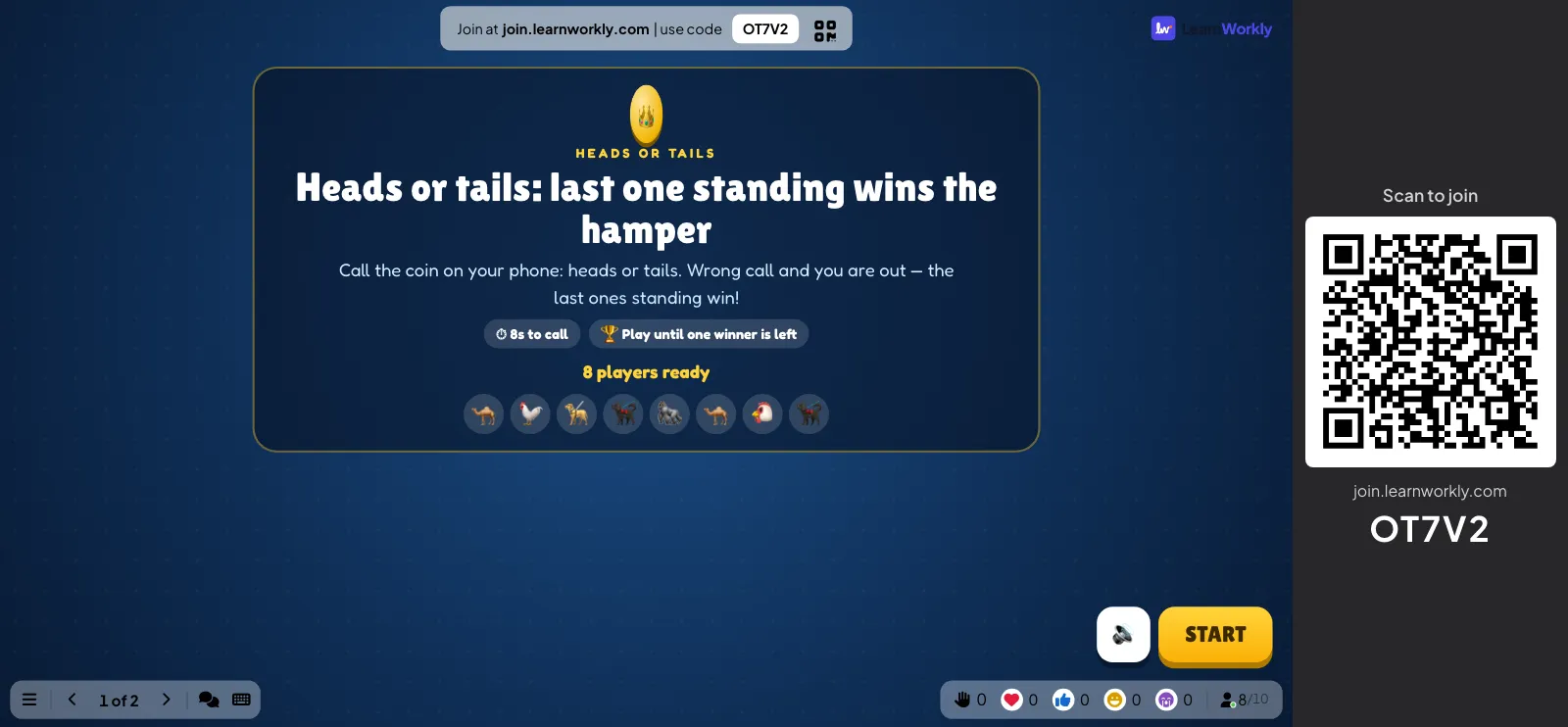
When you press Start, players tap Heads or Tails on their phone. The big screen shows a countdown and a live tally of heads and tails. When time runs out, or everyone still in has called, the coin flips and lands, and wrong calls are out. A player who does not call counts as wrong. If everyone still in called it wrong, nobody is out and the game carries on with the next flip.

Stop at finalists, not one winner
For a gala or a fun day, Play until is the useful setting. Choose 3, 5 or 10 winners and the game stops when that many players (or fewer) are left, with their names on the screen. Then bring the finalists up to the stage and finish the old way, hands on heads, with a real coin. Phones handle the crowded first rounds; the stage gets the theatre of the last minute. One flip can knock out more players than you need, so you may end with fewer finalists than you chose. Keep a second prize in reserve for that.
Make the prize moment count
- Announce the prize before the first flip, and show it if you can.
- Leave the lobby open for a minute before you press Start, so latecomers are in for the first flip; the lobby shows how many players are ready.
- If you show the screen on a stream or a video call, ask people to use a first name or a fun nickname, because the winners’ names go up on the screen.
- Restart the game from the slide for a second prize with the same room.
For the rest of the programme, see games and quizzes for team events and fun days, or our Christmas quiz for work if you are planning the office party.
Heads or tails in the classroom
Teachers use the heads or tails game for the same reason event hosts do: it is quick, and every pupil can see that the teacher did not choose the winner.
- Who goes first. The first group to present, the first team in a quiz, the first table to line up for lunch.
- A small prize. A sticker, or the job of handing out the books.
- A brain break. Three minutes on your feet between two long tasks.
- A probability starter. Ask the class to predict how many rounds it will take for 28 players to get down to one, then play and compare. Run it twice and the answer changes, which is the lesson.
In LearnWorkly the game runs while you present the slide on the board, and nobody is marked on a coin call. A pupil who goes out in round one has lost nothing but a coin call.
Common problems and quick fixes
- The same confident pupil wins twice. It happens. Each flip is a fresh 50/50, and nobody has a lucky streak.
- People switch off once they are out. Give them a job: they shout the result with you, or predict the winner from the finalists.
- The room is quiet. Turn the sound up. A coin flip with no reaction is just a coin flip; with a room shouting “Heads!”, it is the best two minutes of the evening.